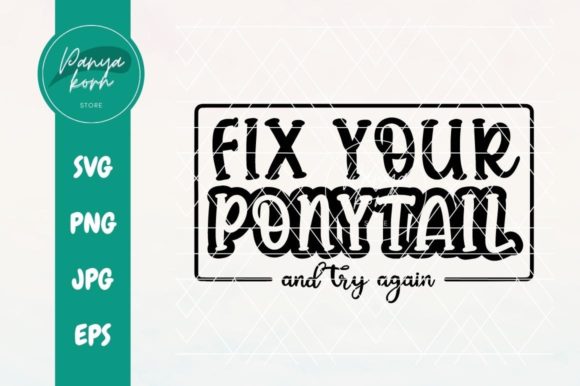
Fix Your Ponytail and Try Again: A Graphics Review for Crafts
As a brand designer who has spent years helping local businesses establish their visual identity, I recently evaluated a specific graphic design asset titled Fix Your Ponytail and Try Again. This piece falls under the Crafts and Graphics categories, but its potential application extends far beyond simple digital downloads. When reviewing this asset for a real-world project, my focus shifts immediately to how it functions as a tool for small business branding rather than just a decorative element.
The first impression of Fix Your Ponytail and Try Again is one of spirited resilience and approachable humor. It exudes a mood that is both playful and empowering, suggesting a brand personality that is friendly, modern, and deeply human. Unlike stiff corporate imagery, this design feels handmade in spirit, even if produced digitally. It suggests a business that does not take itself too seriously but takes its mission seriously. For a boutique owner or a creative entrepreneur, this asset signals an emotional connection with customers who value authenticity over perfection. It fits perfectly within a niche that blends fitness, lifestyle, and personal growth, making it an ideal candidate for packaging design or promotional visuals where personality is paramount.
Integrating the Asset into Real Local Business Projects
In a recent scenario involving a local coffee shop and bakery hybrid, I considered how this graphic could elevate the customer experience. Imagine the design printed on the sleeve of a hot latte cup or embossed on a kraft paper bag for a morning pastry run. The phrase Fix Your Ponytail and Try Again acts as a conversation starter, transforming a standard transaction into a moment of shared encouragement. This is the power of effective visual hierarchy in action; the text draws the eye, creates a pause, and leaves a lasting memory.
This design asset is incredibly versatile for various physical touchpoints. For a handmade soap business, it could serve as a decorative accent on a hang tag, adding a layer of whimsy to organic packaging. In the realm of product labels, it works beautifully as a hero graphic for a seasonal campaign, perhaps for a "New Year, New You" skincare line. The asset supports stronger first impressions by ensuring that every item leaving the store carries a consistent brand message. Whether used on a flyer, a poster, or a business card, the design reinforces a cohesive brand identity that feels polished and intentional.
Social media managers will find particular value here. The graphic translates seamlessly into social media graphics for Instagram stories or Facebook posts. It can be paired with product mockups to create engaging marketing visuals that drive traffic to a website. When used in editorial design for a blog post about local entrepreneurship, it adds a visual break that keeps readers engaged. The ability to use this file in tools like Canva makes it accessible for small teams who need to produce high-quality content quickly without sacrificing professional standards.
Strategic Placement for Maximum Impact
To maximize the return on this investment, the asset should be deployed strategically. It excels as a hero graphic on landing pages or as a decorative element on thank-you cards included in orders. For a candle brand, placing the design on a sticker seal adds a tactile element of surprise and delight. It is also highly effective for seasonal packaging, allowing brands to refresh their look for holidays or special events without a complete redesign. In a boutique setting, large-format prints of the design can serve as wall art, reinforcing the brand's voice within the physical space.
The asset also shines when used in product mockups. By visualizing the design on t-shirts, mugs, or signs, stakeholders can better understand the final aesthetic before production begins. This visualization helps in securing client approval and ensures that the commercial design meets expectations. Furthermore, using this graphic in promotional ads can increase click-through rates by appealing to the audience's desire for motivation and community.
Navigating Design Limitations and Best Practices
However, no single asset is a universal solution. There are scenarios where Fix Your Ponytail and Try Again requires careful consideration. It may not be suitable for formal corporate branding where a more restrained and serious tone is required. On very small labels, such as those on essential oil bottles, the detail might become lost, leading to a cluttered appearance. Similarly, in layouts already heavy with ingredient lists or legal information, adding this graphic could disrupt the visual hierarchy and confuse the consumer.
Luxury minimalist brands should also exercise caution. If the goal is to convey exclusivity through stark simplicity, the playful nature of this design might clash with the desired aesthetic. Additionally, designers must avoid placing the graphic on low-contrast backgrounds where legibility suffers. The decoration should never compete with critical text; instead, it should support the overall message. When integrating this into web design or print materials, ensure that the file type (SVG or PNG) maintains clarity across different screen sizes and print resolutions.
Essential Notes for the Professional Designer
Before incorporating this asset into a client project, several technical checks are mandatory. Always test the design on real product mockups to see how it interacts with different textures and materials. Check the black and white usage to ensure the design retains its impact without color. Previewing the asset on small labels is crucial to confirm that the typography remains readable.
Color testing is another vital step. Compare the design against your chosen brand palette to ensure harmony. Reviewing the PNG transparency and SVG editability will determine how easily you can adapt the asset for various needs. Inspect the vector quality to ensure crisp lines at any scale. It is also wise to test the design alongside different font styles—serif, sans serif, script, handwritten, and display—to find the perfect typographic pairing that enhances the overall composition.
Finally, confirming the commercial license is non-negotiable. Ensure that the purchase allows for use in physical product sales, marketing visuals, and client work. Without proper licensing, the risk of legal issues undermines the professionalism of the entire project. By following these guidelines, designers can leverage Fix Your Ponytail and Try Again to create compelling professional branding that resonates with audiences and drives business success.
Ultimately, this digital product offers more than just a clipart image; it provides a narrative tool for local business owners looking to stand out. Whether for a food label, home decor shop, or children's product brand, the right graphic can bridge the gap between a product and its user. By treating this asset with the strategic care of a seasoned designer, you transform a simple illustration into a cornerstone of a memorable brand experience.